Health/Stroke Recovery—
By Suzanne Porter, producer, California News Service, a bureau of Public News Service.
Stroke survivors and doctors say the key to recovery is patience and optimism.
During a stroke, blood vessels become blocked or burst, depriving certain parts of the brain of oxygen.
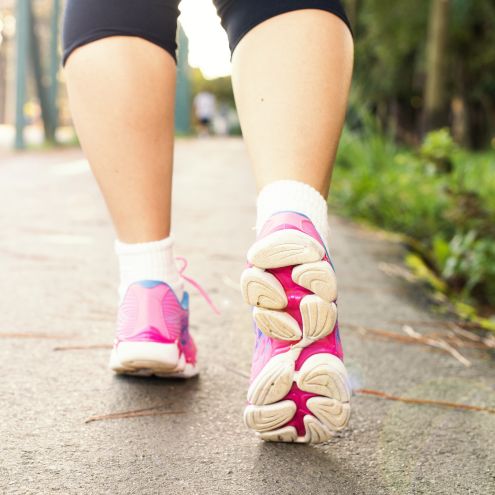
Precious Guan, who lives in the city of Cerritos in Los Angeles County, is a former nurse who suffered her first stroke at age 28 and a second a few months later. She had trouble walking and swallowing, but nine years later, she has made significant progress and urges patients to stay the course. Guan has regained mobility and can now participate in mile-long Heart Walks.
“It’s just a really long process, and sometimes it’s kind of hard to gauge whether what you’re doing is helping,” Guan acknowledged. “But in the long run, that’s when you kind of start to notice the changes.”
It is very important to get to the emergency room right away if you show signs of a stroke. Experts have developed an acronym to help people remember the symptoms: “BE FAST.” It stands for balance loss, eye or vision changes, face drooping, arm weakness, speech difficulty, and time to call 911. Some stroke damage can be reduced or reversed if the patient gets immediate treatment.
Dr. May Nour, an interventional neurologist at UCLA Health and a volunteer expert for the American Heart Association, said early recovery is a very good sign.
“The greatest recovery perhaps is in the first six weeks to three months of big milestones,” Nour explained. “But that recovery continues up to one year, and where someone finds themselves after one year is their new baseline.”
She added stroke survivors who keep their spirits up and dedicate themselves to their rehabilitation plan can make slow and steady progress with physical, occupational, speech and vision therapy. Nour sees patients in the office but also works on an ambulance equipped with a mobile stroke unit, one of only three serving Los Angeles County.